
Quetext does a solid job as a plagiarism checker, but it is not for everyone: English-first interface, word-based quotas, an AI detector that is not its strongest feature, and no access to the institutional databases that schools use. Here are the Quetext alternatives worth a look in 2026, with plan prices read on the vendors’ own pages, what each does better or worse, and how to pick by use case: a thesis, blog posts, a content team or a school.
In short: for publishers and agencies, Originality.ai is the most complete alternative. For a trial with plagiarism, AI detection and reports, Winston AI. For teams and schools, Copyleaks. For a student checking one document, Scribbr’s pay-per-document model is enough. And if AI detection is the main worry, GPTZero has a free plan to start with.
Prices and limits read on the official pages on October 25, 2026, not tested hands-on. This page contains affiliate links.
Contents
Why look for a Quetext alternative?
Quetext is a fair choice: a readable free plan (1,000 words of plagiarism checking and 1,000 words of AI detection), highlighted sources, and plans from $9.99 a month for plagiarism alone. Our Quetext review (in French) covers it in detail. Still, a few reasons push people to look elsewhere:
- Quotas are word-based: 100,000 words a month on Essential, 200,000 on Professional. Long documents eat the allowance fast.
- The AI detector is not the headline feature: specialists such as GPTZero, Winston AI and Originality.ai put their whole research into it.
- No institutional database: a Quetext score does not predict what Turnitin or Compilatio will say, because the comparison sources differ.
- Team needs: Google Docs add-ons, writing history, several seats, API.
Side-by-side comparison
Data read on the official pages on October 25, 2026 (some screenshots date from October 23). Prices change often, so check the vendor’s page before you pay.
| Tool | Best for | Free | Entry price |
|---|---|---|---|
| Quetext (reference) | Plagiarism with AI as a bonus | 1,000 words plagiarism + 1,000 words AI | $9.99/mo plagiarism only, $14.99/mo suite |
| Originality.ai | Publishers, agencies | 10,000 words one-time, to confirm | $12.95/mo billed yearly (200k words) |
| Winston AI | Students, creators | 14-day trial, 2,000 credits | See pricing page |
| Copyleaks | Teams, schools | Limited trial, figures vary | $13.99/mo billed yearly (Personal) |
| GPTZero | AI detection first | 10,000 words a month | See pricing page |
| Scribbr | One document | Free AI detector, plagiarism is paid | About $19.95 per short document |
| Grammarly | Writing in English | No plagiarism on the free plan | Pro at 12 euros/mo |
| Turnitin, Compilatio | Institutions | No | Through your school |
1. Originality.ai: the pro pick for publishing
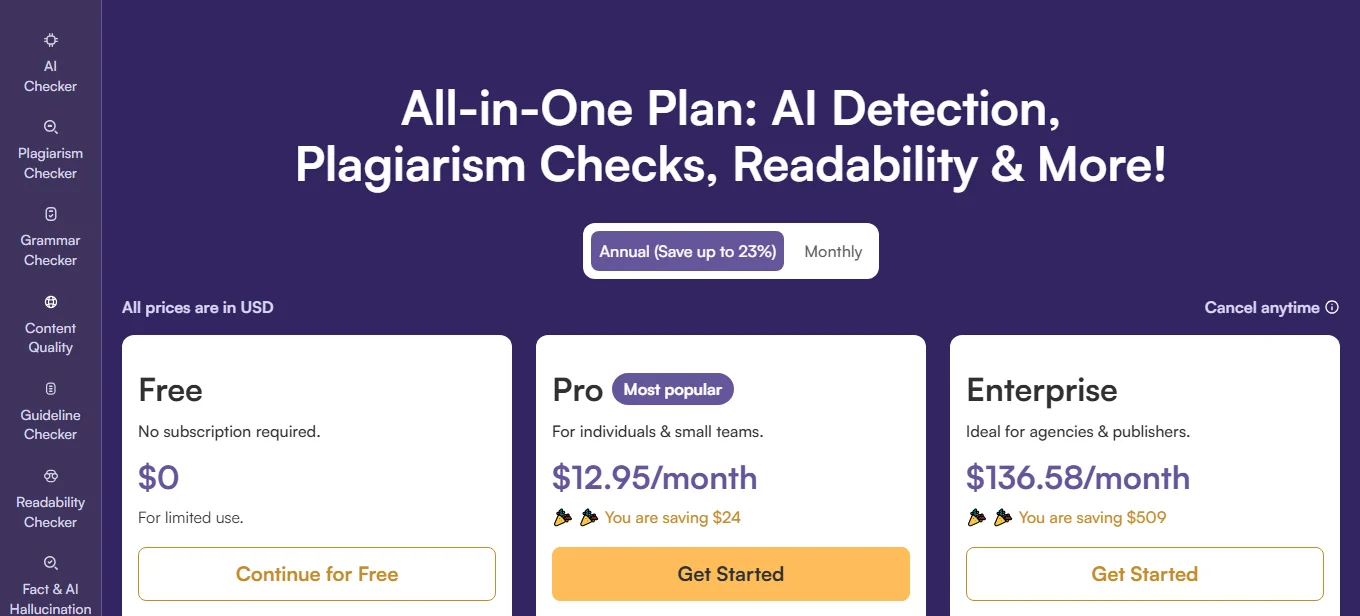
Originality.ai is built for site owners and agencies: AI detection, plagiarism, readability, fact checking and a Chrome extension that records how a document was written. It is credit based (one credit covers 100 words). On its pricing page on October 23, 2026: Free, Pro at $12.95 a month billed yearly ($14.95 monthly) for 200,000 words, Enterprise at $136.58 a month billed yearly with API access. The free tier includes plagiarism with 10,000 words, but the same page also mentions 60 daily credits, so confirm on your account.
Better than Quetext for: a steady flow of articles, AI detection in the same pass, writing history. Worse for: a tiny budget, since the free tier is a starter credit.
2. Winston AI: plagiarism, AI detection and reports
Winston AI detects text from ChatGPT, Gemini or Claude, checks plagiarism and produces shareable PDF reports. Its free offer is really a trial: about 2,000 credits over 14 days. That is enough to check a handful of articles and decide, not to work on every day.

Better than Quetext for: reports and AI detection. Worse for: a lasting free option, since the trial ends after 14 days. See our Winston AI review (French).
3. Copyleaks: AI and plagiarism for organizations
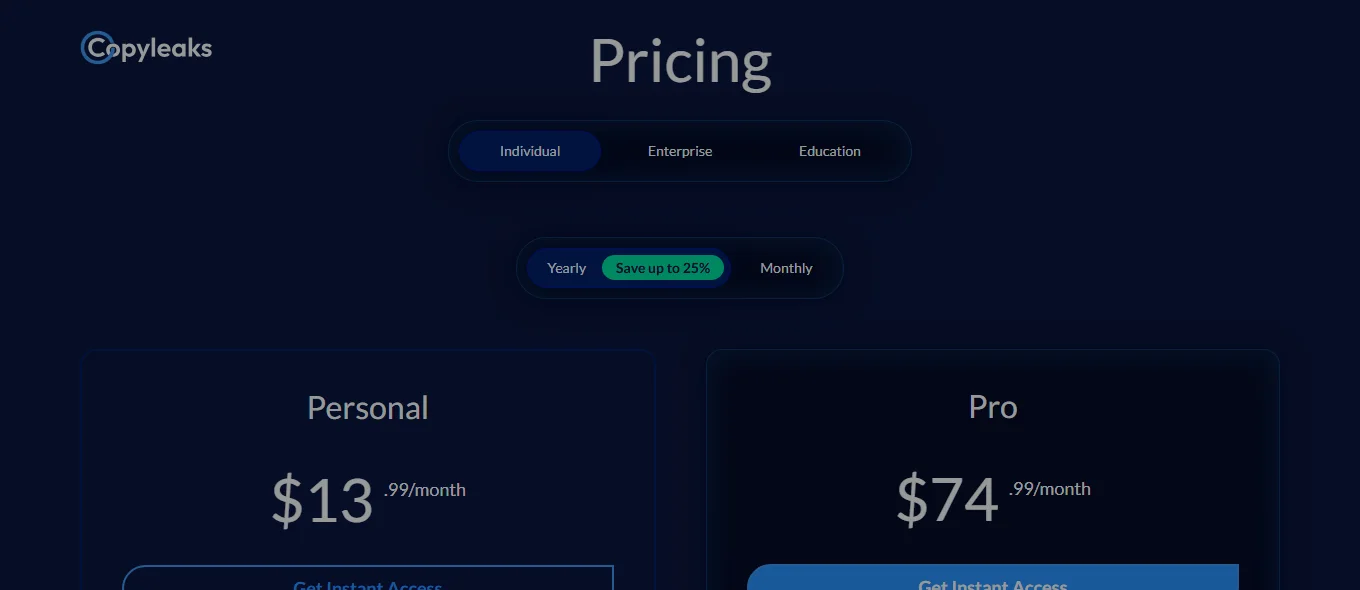
Copyleaks puts AI detection (over 30 languages, according to its materials) and plagiarism in one report, with browser and Google Docs add-ons. The Personal plan is $13.99 a month billed yearly ($167.88 a year) or $16.99 monthly, with 1,200 credits covering up to 300,000 words. The Pro plan is $74.99 a month billed yearly and adds team seats and site scanning. Third-party comparison sites describe its free offer differently, so check the official site.
Better than Quetext for: multi-user use and integrations. Worse for: a lone student, since Personal costs more than Quetext’s suite without a clear free plan.
4. GPTZero: when AI detection comes first
GPTZero is mainly an AI detector: overall score, sentence-level highlighting, multi-model detection and a plagiarism check as a complement. Its free plan was around 10,000 words a month when we read it on October 23. It is the natural second opinion to cross-check a result. We have a full review (French) and a guide to the free GPTZero plan (French).

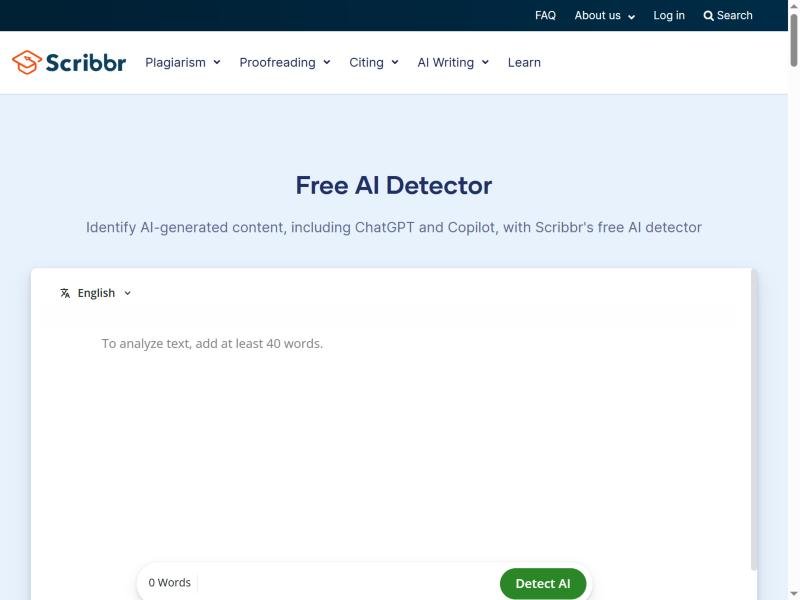
5. Scribbr: pay per document, no subscription
Scribbr bills its plagiarism check per document: the pages we saw mention roughly $19.95 for a short document and $29.95 for a longer one, with no monthly subscription. Handy for a thesis you check once, expensive if you check often. Its AI detector is free for short texts. These amounts come from secondary pages, so confirm them on Scribbr’s site.
6. Grammarly: a plagiarism bonus inside a writing suite
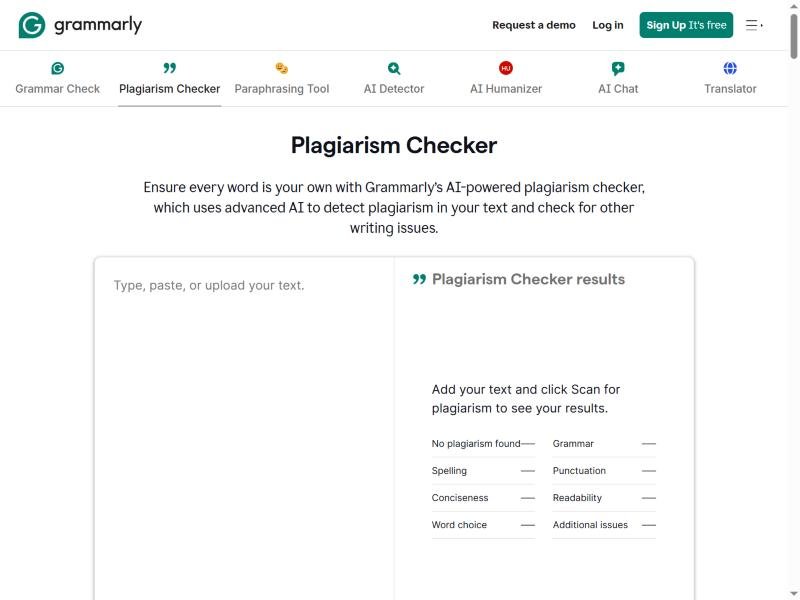
Grammarly fixes style and spelling, mostly in English. Plagiarism detection and its AI detector sit in the Pro plan (12 euros a month on the page we saw), not in the free plan. If you already use it to polish drafts it is convenient; otherwise a dedicated checker costs less and goes further on sources.
7. Turnitin and Compilatio: institutional tools
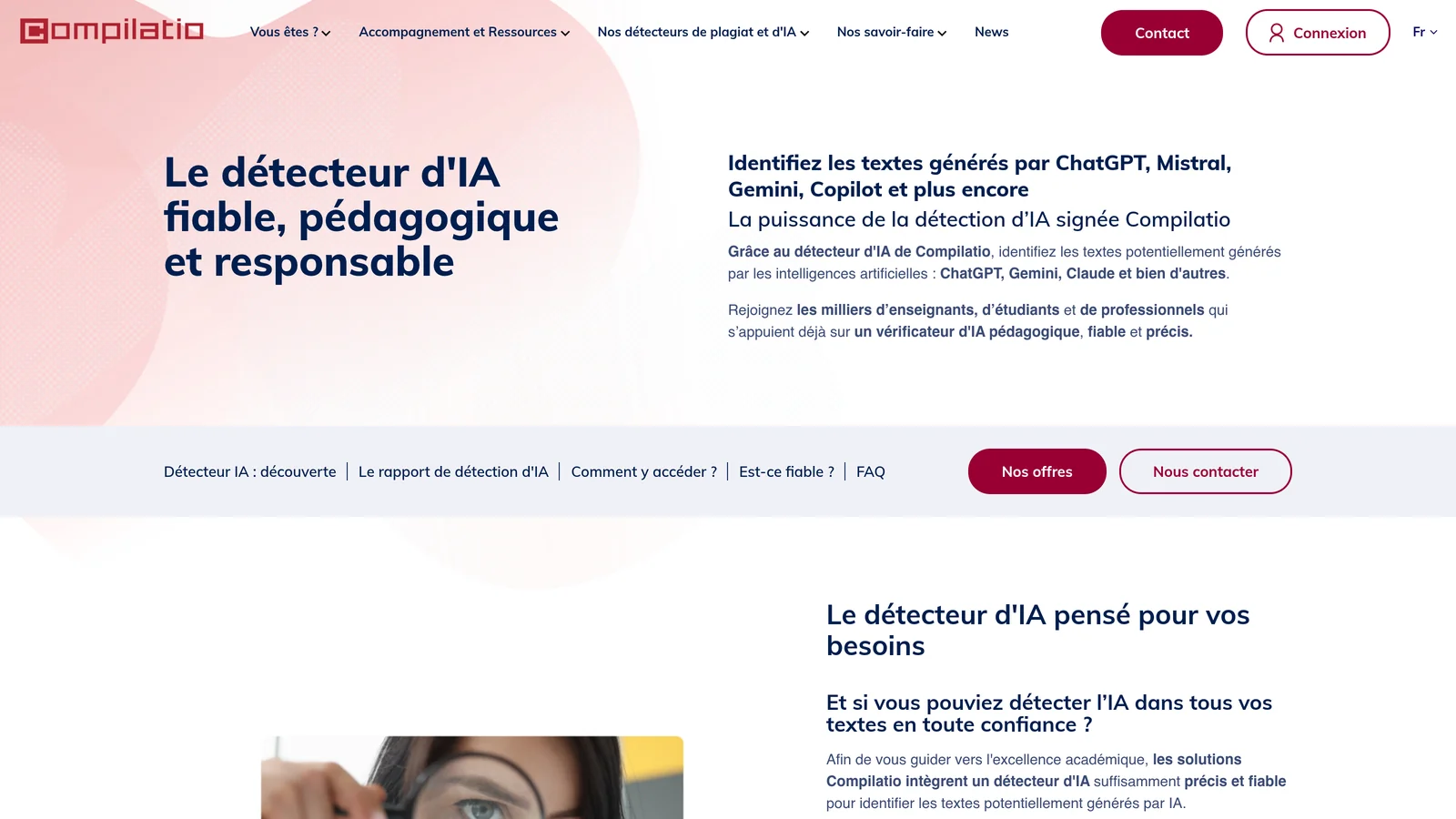
Turnitin and Compilatio are sold to schools and universities, not to individuals. If your institution uses one, its result is the one that counts, since its databases include student work that Quetext cannot see. Compilatio has a student version whose price is not public, as far as we could find.
What it costs over a year
In dollars, billed yearly over 12 months: Quetext plagiarism only is about $66 (5.49 a month), Quetext Essential about $99 (8.25 a month), Originality.ai Pro $155.40 and Copyleaks Personal $167.88. With Scribbr, each check costs $20 to $30, so three checks in a year already beat a Quetext subscription. Grammarly Pro passes 140 euros a year but does far more than plagiarism checks.
Rule of thumb: for an occasional check, the free plan or one month of subscription is enough. For weekly checks, a yearly plan almost always beats pay-per-document.
How to choose
- Student, one document: Quetext free on an excerpt, then Scribbr per document or your school’s tool.
- Web writer or blogger: Originality.ai or Quetext Essential, with AI detection in the same report.
- Agency or content team: Originality.ai Enterprise, Copyleaks Pro or Quetext Professional, after a trial on your own texts.
- Mostly AI detection: GPTZero or Winston AI, plus a second tool to cross-check.
- Teacher: your institution’s tool first, a second opinion when in doubt. A score is a signal, not proof.
Always cross-check two tools before concluding. Our best AI detector comparison helps with the AI side.
Not sure you want to switch?
Start with Quetext’s free plan: up to 1,000 words of plagiarism checking and 1,000 words of AI detection.
FAQ
What is the best alternative to Quetext?
It depends on the use. Originality.ai for web content and teams, Winston AI for a trial with reports, Copyleaks for schools and companies, Scribbr for a one-off document. None is best on every criterion.
Is there a free alternative to Quetext?
Partly: Winston AI has a 14-day trial, Originality.ai a starter credit, GPTZero a monthly quota for AI detection. None offers unlimited free plagiarism checking.
Is Quetext better than Turnitin?
They are different categories. Turnitin is sold to institutions and compares against student databases; Quetext is a self-service tool. A Quetext score does not predict a Turnitin score.
Can Grammarly replace Quetext?
For English text you write yourself, the plagiarism check in Pro may be enough. For deeper source checks, a dedicated checker is better suited.
Do I have to pay to check for plagiarism?
Not always: a short excerpt fits in a free plan. For a thesis or regular use you need a subscription or pay-per-document.